
Replica Rolex Watches Within Reach in Australia – Yours Today
What I Learned Buying a 4131 Daytona Replica in Australia
I have owned four Daytona replicas in three years, and I have sold two of them at a loss because I got the movement wrong on the first purchase. That mistake cost me more than any spec sheet ever taught me. If you are searching for a replica rolex in Australia right now, the most consequential decision is not the dial color, the bracelet feel, or which seller replies fastest. It is the movement inside the case. Everything else is secondary, and most buying guides get the order of priorities backward. When you buy a replica rolex, you are not just buying a watch. You are buying a specific movement, a specific factory build, and a specific seller relationship. The movement is the part that decides whether the watch still works after eighteen months. The factory build decides whether the watch looks right at arm’s length. The seller relationship decides whether you have any recourse when something goes wrong. Most buyers evaluate those three things in reverse order, and that is why so many replica rolexes end up on the secondary market within a few months.
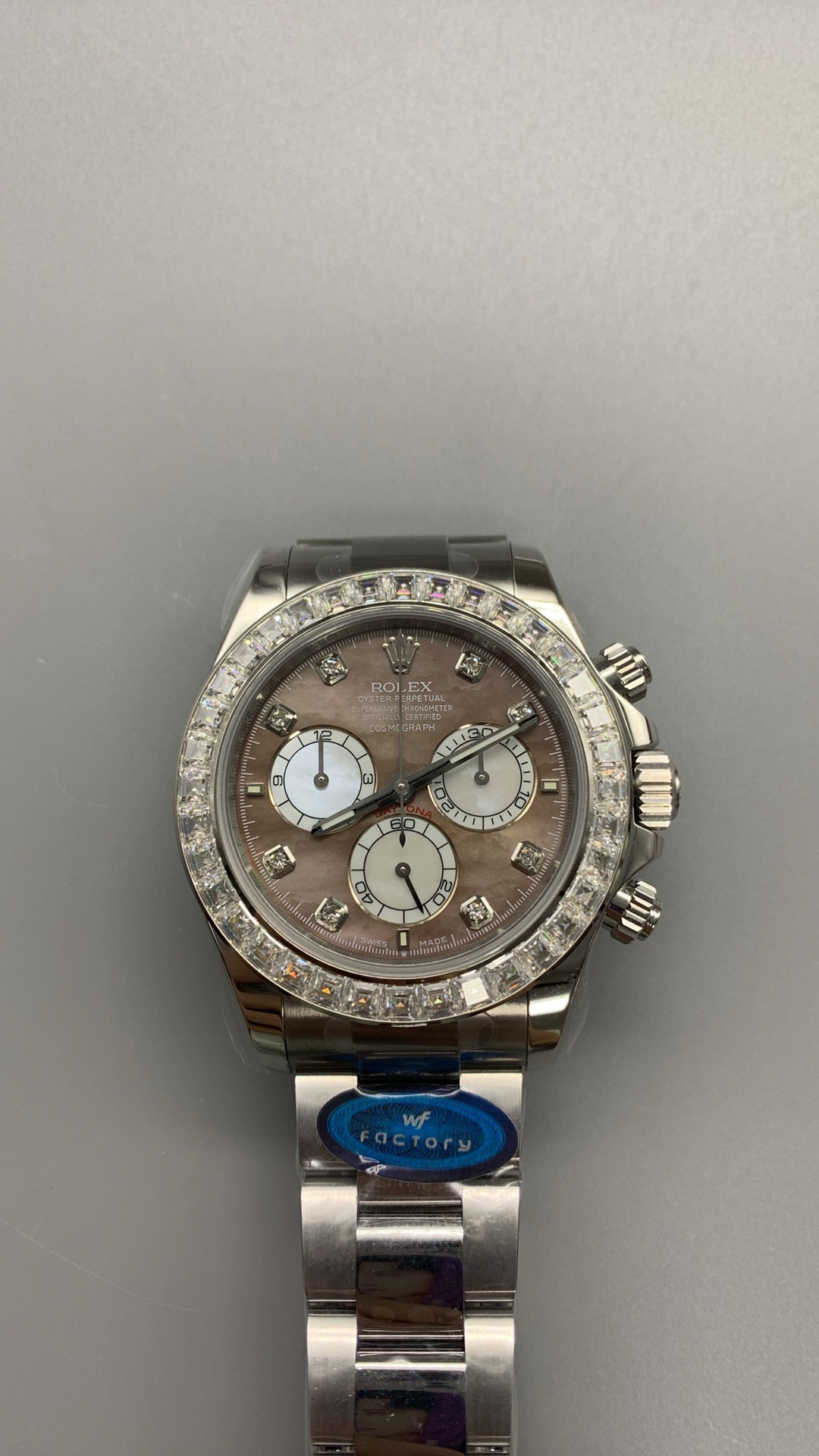
Why the 4131 Label Is a Buying Trap, Not a Specification
The reference 126500LN Daytona introduced the caliber 4131 as the successor to the long-running 4130. In the replica market, “4131” has become a label attached to at least three structurally different products, and treating the label as a specification is the most expensive mistake a first-time buyer makes. A listing that says “4131” tells you almost nothing until the seller names the movement source and the factory that built the watch. I have seen sellers use the same photos for a Dandong-based build and a 7750-based build with a decorative plate, and the price difference was small enough that a buyer who did not ask the right question would never know which one arrived. The label is a starting point for a conversation, not a conclusion. This is not a niche distinction for collectors. It is the central variable that separates a watch you keep from a watch you resell.
The Three Different Movements Sold as a 4131
The first type is the Dandong 4131, a purpose-built integrated chronograph that follows the architecture of the genuine movement closely enough that a watchmaker familiar with the original can navigate it without a different mental map. The second is the Shanghai 4131 used by Clean Factory, also an integrated design but with different finishing and plating depth. The third is the shortcut build: a 7750 base with a decorative plate that mimics the visual layout without the integrated chronograph mechanism. The practical difference is not a subtle refinement. The integrated designs have a chronograph engagement that feels like a proper column-wheel system, while the converted 7750 can develop pusher mushiness and reset drift after months of occasional use. If a seller cannot tell you which of these three is inside the watch, you do not yet know what you are buying. That uncertainty is the first thing to eliminate before any money changes hands.
What the Movement Choice Costs You After Six Months
The cost of getting this wrong does not appear at checkout. It appears six months later when the reset refuses to snap back to zero, or when the pusher travel feels different on each side, or when the watch stops winding smoothly. From what I have seen in my own collection and in the hands of three friends who bought the same generation, the Dandong 4131 has a repair record that experienced replica watchmakers describe as genuinely low under normal conditions, with failures concentrated around drops and hard impacts rather than gradual wear. The 7750-based shortcut is the opposite: it can look acceptable in a wrist shot and still feel compromised within a year. The so-what for an Australian buyer is direct. Ask for the factory name and the movement designation in writing before payment. A seller who cannot answer clearly is either uninformed or hoping you will not ask. Either way, that is not the seller you want handling a repair six months from now.
The Dandong 4131 in Real Wear: Structure, Reserve, and Repair
The Dandong 4131 is a clone in the structural sense that matters: the bridge layout, the balance position, and the chronograph mechanism follow the geometry of the genuine caliber closely enough that the watch behaves like a coherent design rather than a collection of parts. It is not a 1:1 clone in materials. The genuine 4131 uses a gold rotor and hand-finished bevels; the Dandong unit uses a steel rotor with gold-tone plating and machine finishing. I raise the material gap not to dismiss the movement but to set expectations honestly. On a closed-caseback Daytona, the material difference is invisible in use. On a display-back variant, the plating will not survive macro scrutiny from someone who knows what they are looking at. That distinction matters because sellers often blur the line between structural similarity and material equivalence.
How Close Is the Clone, Really?
Structurally, the Dandong 4131 mirrors the genuine layout closely enough that the chronograph mechanism, the winding system, and the balance assembly occupy the same positions. That is what makes it serviceable by a specialist who understands the original design. Materially, it is a different product. The rotor is steel with gold-tone plating rather than solid gold, the bevels are machine-finished rather than hand-lapped, and the surface treatment on the bridges is not the same specification. In daily wear, those differences are invisible. In a display-back watch under a loupe, they are visible to a knowledgeable eye. The honest framing is that the Dandong 4131 is a structurally faithful clone with a different material specification, not a 1:1 replica of the genuine movement. Any seller who claims otherwise is overselling, and that overstatement is itself a signal about how they handle other details.
Stability, Service, and the Australian Repair Problem
The Dandong 4131 runs a twin-barrel layout with a power reserve that lands between 68 and 72 hours in real-world use when fully wound. That is enough to take the watch off Friday evening and put it back on Monday morning without resetting, which is the practical benchmark most buyers actually care about. The winding feel is smooth rather than gritty, the automatic winding is quiet enough that I forget it is there, and the timekeeping on my current example has held within roughly ten seconds a day across several months of alternating between a desk and outdoor use. The chronograph start is crisp, the reset snaps back cleanly, and the pusher resistance is even between the start-stop and reset positions. Serviceability is the part nobody talks about until something breaks. In Australia, most suburban watchmakers will not stock parts for a replica movement and may decline the job outright. The realistic path is a specialist who works with replica movements or a return-to-seller arrangement, and both require planning before the failure happens. If the seller cannot explain their after-sales process in plain language, the movement’s theoretical reliability is irrelevant because you have no practical route to repair it.
Clean vs VS vs BTF: The Comparison That Changes the Decision
The factory comparison is where most guides become useless because they rank names without explaining what the ranking measures. Clean Factory built its reputation on external visual fidelity: the ceramic bezel color, the dial printing, the case profile, and the bracelet finishing. VS Factory built its reputation on the movement, specifically its access to the Dandong 4131 and its willingness to build the watch around that movement rather than treating it as an interchangeable part. BTF sits in the value tier, offering a functional 4131-based Daytona at a lower price point with less refinement in the small details. The decision between them is not a simple ranking. It is a trade-off between what people see at arm’s length and what you experience on the wrist over time. For anyone comparing rolex replica watches across these three factories, the movement designation is the first filter and the external package is the second.
Clean Factory: External Fidelity With a Different Movement
Clean’s external package is genuinely excellent. The ceramic bezel insert depth and the dial texture are the closest I have handled to the reference in a replica, and the case finishing holds up well against daily wear. The bracelet articulation is consistent, the clasp action is positive, and the overall visual impression at conversational distance is strong. The variable is the movement. Clean uses the Shanghai 4131, which is also an integrated design and is quoted at 75 hours of power reserve, but the surface finishing and plating depth are a step below the Dandong unit when you compare them under consistent light. The two movements are closer in performance than the marketing suggests, and one direct comparison concluded that the difference is in finishing rather than failure rate. That is a fair assessment as far as it goes, but finishing is not purely cosmetic when it comes to corrosion resistance and long-term wear on moving surfaces. In a humid climate like much of Australia, that difference matters more than it does in a dry environment.
VS Factory and the Free-Sprung Question
VS Factory’s main advantage is that it builds around the Dandong 4131 rather than treating the movement as an interchangeable part. That matters because the movement is the component that determines whether the watch remains a watch after eighteen months of normal wear. The VS 4131 free-sprung upgrade deserves a specific warning because it is the clearest example of a specification that sounds important and is not. The upgrade changes the visual appearance of the regulator area by hiding the regulating pins under the bridge, but it does not add the weighted balance wheel of a genuine free-sprung design. On a closed-caseback Daytona, you cannot see the difference. On a display-back model, the difference is visible to a knowledgeable eye only under close inspection, and the upgrade does not measurably improve timekeeping stability. If a seller charges a premium for this feature on a closed-back watch, you are paying for something you will never see and will never feel. That is not a reason to avoid VS. It is a reason to avoid paying extra for an upgrade that does not change the wrist experience.
BTF and the Value Tier
BTF occupies a legitimate position for a different buyer. If the goal is to own a working 4131 chronograph for occasional wear without stretching the budget, BTF delivers the core function at a lower entry point. The trade-off is in the details: the bracelet finishing is less refined, the dial printing lacks the depth of the top-tier builds, and the movement finishing is a step down. I would not recommend BTF to someone who wants the watch to feel indistinguishable on the wrist. I would recommend it to someone who wants the chronograph function to work and accepts that the watch announces itself as a replica to anyone who handles it closely. For buyers chasing high quality rolex replicas, the top-tier Clean and VS builds are the relevant comparison. For buyers who want a functional rolex clone at a lower price, BTF is a rational choice as long as the expectations are set correctly.
Common Buyer Mistakes I See Repeated in Australian Forums
The same two mistakes appear in Australian replica discussions every month, and both are avoidable with a small amount of discipline before payment. The first is buying the cosmetics before confirming the movement. The second is treating macro photography as a proxy for wrist satisfaction. Neither mistake is about knowledge of Rolex references. Both are about the order in which a buyer evaluates the product. I have made both mistakes myself, and the cost was not just money. It was the time spent selling a watch I never enjoyed wearing and the friction of explaining to a buyer why I was offloading it after two months.
Mistake One: Buying the Dial Before the Movement
One common mistake is choosing a dial color, bezel style, or bracelet configuration before confirming which movement is inside the case. The external differences between a top-tier build and a mid-tier build are visible mainly under close inspection. The movement difference determines whether the watch still functions correctly after a year of normal use. I have watched buyers pay a premium for a specific dial variant without asking whether the watch used a Dandong 4131, a Shanghai 4131, or a 7750-based shortcut. The result is predictable. The watch looks right in photos and feels wrong in the hand. The correction is simple: confirm the movement and the factory first, then choose the cosmetics. A fake rolex with the right dial and the wrong movement is a worse purchase than the same watch with a less fashionable dial and the right movement, because the movement is the part you cannot replace without spending more than the watch is worth.
Mistake Two: Treating Macro Photos as a Wrist Test
The second mistake is treating a set of macro photos as proof that the watch will satisfy you on the wrist. Macro photography is useful for quality control. It reveals edge quality, dial grain, and date window alignment to a degree that no human eye can perceive at conversational distance. It does not tell you how the watch catches light at normal viewing angles, how the bracelet settles after the first hour, whether the case thickness disappears under a shirt cuff, or whether the pusher action still feels intentional after the novelty fades. I have owned a watch that scored brilliantly on the macro test and disappointed me on the wrist because the bracelet’s link articulation was slightly too stiff and the case sat a millimeter higher than it should have. The macro test is a threshold variable. Once a watch clears a reasonable bar of visual fidelity, additional macro improvements stop translating into wrist satisfaction.
The Wrist Test vs the Macro Test: An Original Way to Judge Value
The replica community has become obsessed with macro photography, and that obsession has distorted how buyers assign value. A 60mm lens and diffused light can reveal flaws that no one will ever see while you are wearing the watch. This is not an argument against quality control. It is an argument for using the right test at the right stage of the decision. The wrist test and the macro test measure different things, and one of them predicts whether you will still be wearing the watch in a year. The other predicts whether the watch will win a photo comparison on a forum. Both have a place, but they should not carry equal weight when you decide what to keep.
What Each Test Actually Measures
The macro test measures finish quality at close range: the edge quality of laser engraving, the grain structure of a sunburst dial, the alignment of a date window, and the depth of the bezel insert. Those are real quality signals, and they are useful for rejecting a bad example before you accept delivery. The wrist test measures a completely different set of variables: how the watch catches light at normal viewing angles, how the bracelet settles on the wrist after the first hour, whether the case thickness disappears under a shirt cuff, and whether the pusher action still feels intentional after the novelty fades. A watch can pass the macro test and fail the wrist test, and a watch can show visible flaws under a loupe and become the one you reach for every morning. The two tests answer different questions, and conflating them is how buyers end up paying a premium for improvements they will never perceive while wearing the watch.
How I Apply Both Before Keeping a Watch
My process is to use the macro test only as a rejection filter. If the dial printing is misaligned, the bezel insert is uneven, or the bracelet finishing is clearly below the expected tier, I return the watch. Once it clears that bar, I stop looking through the loupe and wear it for a week. The wrist test decides whether I keep it. I pay attention to how the bracelet settles after the first hour, whether the case thickness disappears under a cuff, and whether the chronograph pushers still feel deliberate after the novelty fades. The Dandong 4131 already clears the macro bar for most buyers. Spending significantly more for a build that wins a macro comparison but fits the same way on the wrist is a poor use of money. The better question is whether the seller will accept a return if the watch fails the wrist test in the first week, because that is the test that actually decides the outcome.
Buying in Australia: Landed Cost, Customs, and Seller Signals
Australian buyers face a specific set of conditions that change the calculation. Customs seizure is a real risk, not a theoretical one, and the risk is highest when a parcel is declared with obvious brand markers or shipped through channels that trigger intellectual property screening. A seller who understands the Australian route will not put “Rolex” on a customs form. A seller who does is either inexperienced or indifferent to your loss. The practical advice is to ask about the shipping declaration method before payment, not after tracking stalls. If the answer is vague, treat that as a signal about how the seller handles problems generally. The same logic applies to the after-sales process. A seller who answers movement questions with specificity is the same seller you will need to reach if something goes wrong six months from now.
The Costs That Do Not Appear in the Listing
The other Australian-specific cost that rarely appears in reviews is the customs clearance fee that couriers like DHL may charge even when the declared value is low. Buyers have reported fixed fees in the range of AUD 115 plus GST before the parcel is released. That is not the seller’s fault, but it is part of the true landed cost and it should be in your budget before you choose between a cheaper watch and a better one. I factor roughly AUD 150 of potential clearance cost into every overseas purchase now, and that changes the value calculation at the margin. A watch that looks like a bargain at the listing price can become an average deal once the landed cost is included. The same applies to return shipping if the watch fails the wrist test. Budget for the round trip, not just the outbound shipment.
Seller Signals That Matter More Than a Discount
This is where a seller with a track record on the Australian route matters more than a few dollars of price difference. I have had the most consistent experience with the team behind replicafactory.cx, not because they promise the lowest price but because the communication before and after payment has been specific rather than templated. When I asked about the movement version on a Daytona listing, I received a clear answer about which 4131 was inside and what the realistic expectations were for servicing. That kind of transparency is worth more than a discount from an anonymous seller who disappears when the watch arrives with a pusher that feels wrong. For buyers who want to compare the Australian-facing options and see how different sellers present the same factory builds, replica rolex au is a useful reference point before you commit, because the same watch can be described very differently depending on who is selling it.
My Final Decision Framework
If you want the short version based on what I have spent money learning, the decision framework is narrower than most guides suggest. Buy the Dandong 4131, not the Shanghai 4131, unless the external package of a specific Clean build is the only thing you care about and you accept the movement as a secondary concern. Avoid any listing that cannot name the movement source. Do not pay a premium for the VS free-sprung upgrade on a closed-caseback watch because you will never see it and it does not change the wrist experience. Budget for the possibility of a customs clearance fee so that the landed cost does not surprise you. And buy from a seller who answers movement questions with specificity, because that same seller is the one you will need to reach if something goes wrong.
What I Would Buy Today and What I Would Skip
Today I would buy a VS Factory Daytona with the Dandong 4131 for daily wear, because the movement is the part I cannot easily fix and the external package is good enough at conversational distance. I would skip the premium free-sprung upgrade on a closed-back watch, and I would skip any listing that cannot name the movement source. I would consider Clean Factory if the ceramic bezel and dial were the priority and I was comfortable with the Shanghai 4131 as a known trade-off. I would consider BTF only as a value-tier functional chronograph, not as a watch that will satisfy someone who wants the wrist experience to feel indistinguishable. For anyone comparing replica rolex watches across sellers, the movement designation should be the first filter, not the last.
A Short Checklist Before You Pay
Ask for the factory name and the movement designation in writing. Confirm whether the 4131 is Dandong or Shanghai. Ask whether the seller accepts returns if the watch fails the wrist test in the first week. Ask about the shipping declaration method for Australia and whether the seller covers seizure risk. Ask what the after-sales process looks like and who pays shipping for a service. Check whether the price includes the potential customs clearance fee or whether that is a separate cost. And read the listing for claims that sound too broad, such as “1:1 clone” without a material specification, because those claims are usually a sign that the seller is marketing rather than explaining. A replica rolex can be a good purchase when the movement is right and the seller is transparent. It becomes an expensive lesson when either of those is missing.